


21/06-2023
Product release: Transfer Centre
The Enetpulse Transfer Centre provides sports fans with constant news & gossips during and outside of the transfer windows.
The Enetpulse Transfer Centre provides sports fans with constant news & gossips during and outside of the transfer windows.

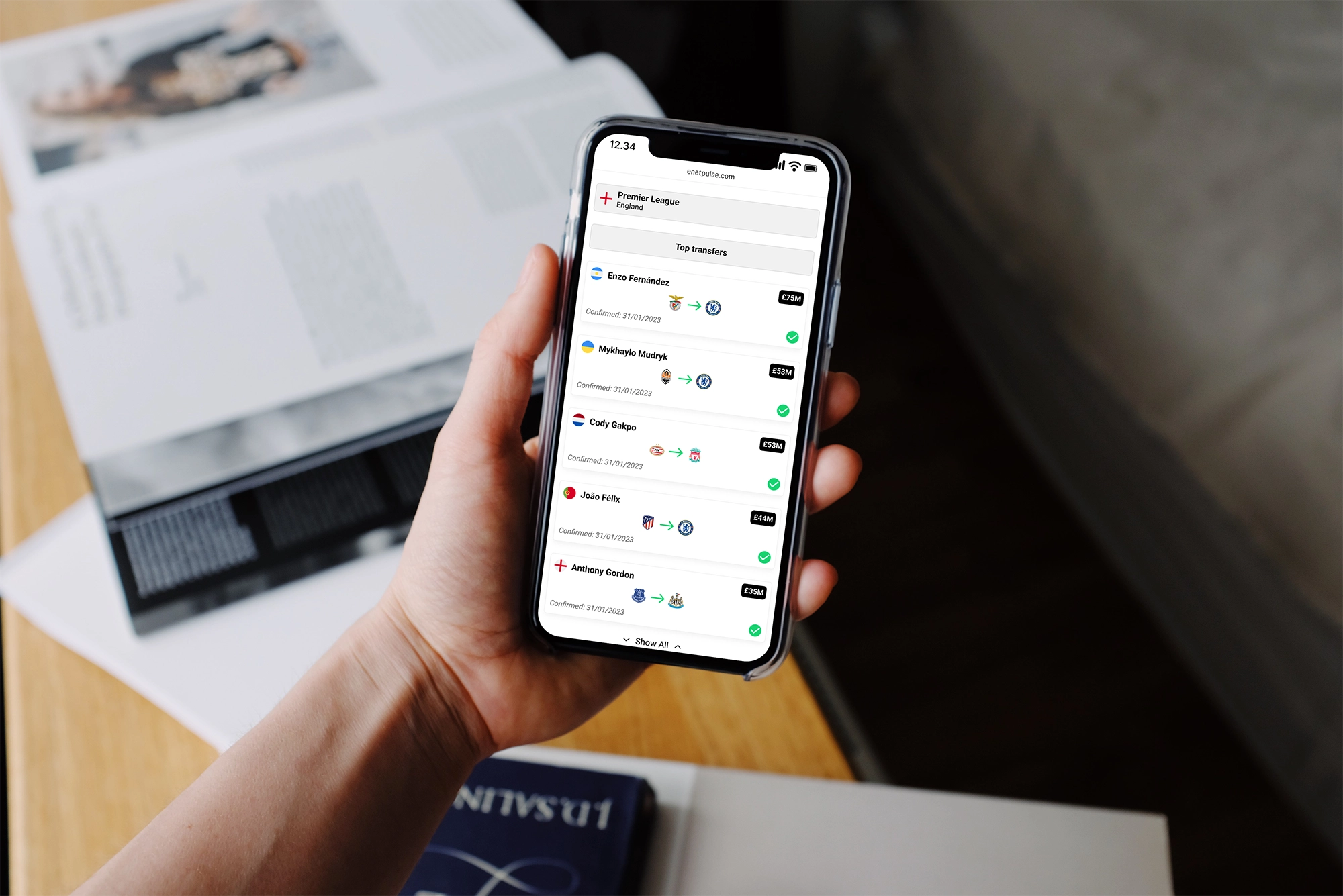
Our transfer centre updates on not only ‘done deals’, but also expected transfers, gossip/rumours and details related to the upcoming transfers. Included is:
The transfer service is updated several times weekly during the entire season. During the transfer window in each country, the service is updated daily.
Click here to read more!

Enetpulse and Team Danmark have officially announced a strategic partnership focused on advancing data-driven performance analysis across Olympic and Paralympic sports. Under the agreement, Enetpulse will deliver a comprehensive sports data solution, spanning extensive historical and current results. This empowers Team Danmark to benchmark athlete performance against competing nations and make strategic and funding decisions ahead of major international competitions.

We are excited to announce that the Enetpulse team will be attending SBC Summit 2026, between 29–30 September in Lisbon. As one of the premier global gatherings for the sports and iGaming industry, bringing together over 30,000 attendees, it’s an event we wouldn’t miss.
Attending SBC Summit 2026 reflects our commitment to staying at the forefront of sports data innovation and industry trends. With 2026 being a landmark year for football following the massive audience and coverage around the FIFA 2026 World Cup, it’s an exciting time for the industry to connect.
The summit offers an ideal space for us to catch up face-to-face, talk shop, and discover new ways to work together. We’re excited to show how our flexible sports data and API solutions can address your platform’s biggest challenges today and down the road.

The countdown is over. The Championships 2026 begin on Monday, June 29, bringing two weeks of world-class tennis, unforgettable moments, and global attention to the iconic grass courts of the All England Club.
Wimbledon has always been about more than trophies. As the third Grand Slam of the tennis calendar, Wimbledon combines rich tradition with elite competition. From thrilling five-set battles to breakout performances from rising stars, it’s a tournament that consistently delivers stories that capture audiences worldwide. For sportsbooks, media companies, and sports apps, Wimbledon is one of the busiest events on the tennis calendar.