


20/11-2023
Article: Visualizing sports data for brand enhancement
In this article we discuss strategies to overcome industry challenges by leveraging the visualization of sports data.
In this article we discuss strategies to overcome industry challenges by leveraging the visualization of sports data.

As in any industry, there are several challenges in the world of sports coverage that prevent companies from getting the most out of their business and in turn hurt their revenue potential. Leveraging sports data in the right way is key to overcoming some of these challenges.
One of the common challenges in the sports coverage industry is the fear of changing providers. Despite dissatisfaction, many companies hesitate to change providers, apprehensive about potential operational disruptions, integration challenges, and potential downtime.
Another common challenge many companies face is limited customer engagement. Traditional platforms may fail to fully harness the power of data for fostering deeper customer interactions, leading to missed opportunities for audience engagement and retention.
But fear not – in the following section we will present a strategy tailored to solve these challenges and enhance your brand.

Raw numbers alone often fail to tell the whole story. They must be transformed, envisioned, and made accessible to truly bring out their value. Sure, the names Kylian Mbappe and Alisson Becker are familiar to many, but what about QPR’s Chris Willock or UC Sampdoria’s Bruno Amione? And let’s say there’s a goal scored from 30 yards out – but was it right from the center or did it arc from the sides? That’s just scratching the surface; we’ve yet to dive into the realm of statistics amassed over countless games or even whole seasons. This is where data visualization steps in, converting intricate data patterns into intuitive and aesthetically pleasing designs that not only drive engagement but also aid in decision-making.
What sets companies apart in today’s competitive marketplace is the ability to think outside the box, use data in a novel way, and weave their own unique stories. But you shouldn’t be doing all the work – the chosen data provider must offer comprehensive sports coverage and top-tier data quality that’s easy to navigate. Even better, imagine if they could shine a light on how to tailor the numbers to strike a chord with your product and your audience. That’s the magic mix to really turbocharge your brand’s potential.
This sentiment isn’t a standalone one. Terje Alstad, Head of Sportsdata at NTB, powerfully illustrates this point by saying:
Alstad’s sentiment is shared by many in our client network, as many appreciate the adaptable nature of Enetpulse’s data and its smooth blend with local data streams.
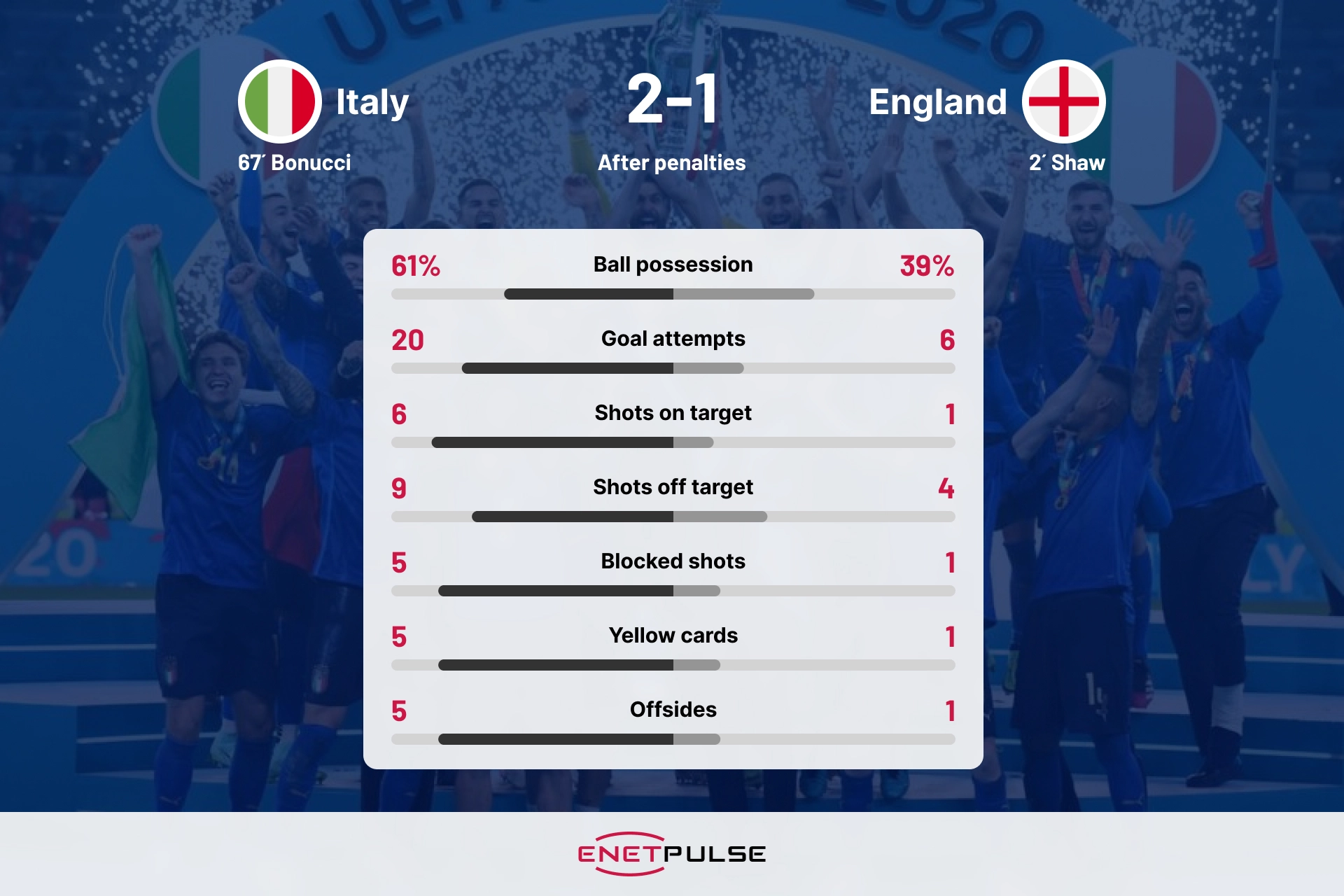
This infographic showcases the potential of data visualization. Watch as our solutions give raw numbers a new form, turning them into captivating visuals that engage viewers and drive conversions.
If you want to learn about more strategies that can help you overcome industry challenges, click below to download our whitepaper where we have boiled down some of the essential industry knowledge that we have collected over the span of 23 years in the game!

We are excited to announce that the Enetpulse team will be attending SBC Summit 2026, between 29–30 September in Lisbon. As one of the premier global gatherings for the sports and iGaming industry, bringing together over 30,000 attendees, it’s an event we wouldn’t miss.
Attending SBC Summit 2026 reflects our commitment to staying at the forefront of sports data innovation and industry trends. With 2026 being a landmark year for football following the massive audience and coverage around the FIFA 2026 World Cup, it’s an exciting time for the industry to connect.
The summit offers an ideal space for us to catch up face-to-face, talk shop, and discover new ways to work together. We’re excited to show how our flexible sports data and API solutions can address your platform’s biggest challenges today and down the road.

The countdown is over. The Championships 2026 begin on Monday, June 29, bringing two weeks of world-class tennis, unforgettable moments, and global attention to the iconic grass courts of the All England Club.
Wimbledon has always been about more than trophies. As the third Grand Slam of the tennis calendar, Wimbledon combines rich tradition with elite competition. From thrilling five-set battles to breakout performances from rising stars, it’s a tournament that consistently delivers stories that capture audiences worldwide. For sportsbooks, media companies, and sports apps, Wimbledon is one of the busiest events on the tennis calendar.

The 2026 Tour de France starts outside of France. On 4 July, the Grand Départ takes place in Barcelona, making it the most southerly start in the race’s history. From there, the 113th edition runs for 23 days and 21 stages, covering 3,333 km before finishing on the iconic Champs-Élysées in Paris on 26 July. Stage 1 is also a departure from recent editions: a 19.7 km team time trial, the first at the Tour since the 2019 Brussels Prologue, and the first run under classic team time trial rules since 1971.
From Barcelona, the race heads into the Pyrenees as early as stage 3, before working through the Massif Central, the Vosges, and an Alpine finale that sends the peloton up Alpe d’Huez on back-to-back days, a first in Grand Tour history.